GROUND — layer 3 of seven
Gesso: the White Everything Sits On
Before the first mark, there is a layer that determines how every subsequent layer will behave. That layer is gesso — and the word covers two very different things.
What the Word Actually Means
Walk into any art supply shop and you will find white stuff in a tub labelled gesso. It dries fast, it is milky coming out and white when set, and it goes on with a brush or a roller. It is also not — in any traditional sense — gesso at all. That word has been borrowed and stuck to an acrylic dispersion that behaves almost nothing like the material it replaced. To understand what you are looking at in a painting, you need to know what the original is, what the substitute is, and why the difference is visible on the surface of the finished work.
The word comes from the Italian for chalk, gesso being a transliteration of the Latin gypsum. In its classical form — used across Europe from the medieval period through the Renaissance and well beyond — gesso is a mixture of two things: a white, inert powder and an animal-hide glue. The powder is calcium carbonate, which is chalk, or calcium sulphate, which is true gypsum. The glue is most commonly rabbit-skin glue, made by simmering dried rabbit hide in water until the collagen dissolves into a warm, slightly amber liquid. When these two are combined in the right proportions and applied warm to a rigid support — a wooden panel, typically — the result is one of the most receptive painting surfaces ever devised.
What Traditional Gesso Does
The glue matters more than the powder in some respects. Rabbit-skin glue is hygroscopic, meaning it absorbs and releases moisture from the air. That quality is exactly why traditional gesso is unsuitable for flexible supports like canvas, at least without modification: a panel stays rigid, so the gesso can shrink and swell slightly without cracking. Stretched canvas moves too much, and a brittle chalk-and-glue ground will fracture. This is why, historically, panels were the standard support for gesso grounds, and why Flemish and Italian Renaissance painters built their work on wood rather than fabric.
A properly made gesso ground is built up in layers. The first coat is often gesso grosso — coarser, applied thickly to fill the grain of the wood and establish a level surface. Over that goes gesso sottile — literally, thin gesso — which has been slaked in water for an extended period, sometimes weeks, to make the particles exceptionally fine. The result, sanded between coats and burnished when fully dry, is a surface of almost unnatural smoothness: cool, slightly luminous, bright white, and with a subtle tooth that holds paint without either resisting it or swallowing it instantly. When you stand in front of a panel painting by Jan van Eyck or Piero della Francesca and notice a depth in the white areas that no modern reproduction captures, that depth has something to do with how oil paint interacts with a gesso ground: the surface is slightly absorbent, pulling the medium gently downward, concentrating the pigment at the surface.
Traditional gesso can also be coloured. Painters sometimes toned the upper coats warm with ochre or cool with a grey to establish a mid-tone that would read through subsequent transparent layers — a practice with its own substantial history and logic, explored in what a coloured ground contributes to a finished surface. But even when toned, the underlying structure is the same: glue and chalk, built up and smoothed, creating a physical foundation that is simultaneously hard, brittle, and optically alive.
What Acrylic Gesso Is, and Why It Is Sold Under the Same Name
Acrylic gesso emerged in the mid-twentieth century, partly as a response to the growth of canvas as a dominant support. Painters working large on fabric needed a ground that could flex without cracking, and traditional chalk-and-glue ground cannot do that. Acrylic dispersion — the same binder used in acrylic paint itself — is flexible when dry. Manufacturers combined it with titanium white, a pigment, and various fillers and thickeners to produce a white, brushable primer that would stick to canvas and not crack when the fabric moved.
Titanium white is worth noting here. It is an intensely opaque pigment, far more so than chalk, introduced commercially in the early twentieth century and now nearly ubiquitous in both artist and industrial paints. A ground built with titanium white is denser and more reflective than a chalk ground. The surface it produces is bright in a different way — a brighter, cooler, more plastic white — and it is far less absorbent. This matters when oil paint goes on top: on a traditional gesso ground, the oil in the paint migrates slightly into the ground; on an acrylic ground, it sits more fully on the surface, because the acrylic is essentially non-porous once dry. The optical result is subtly different, though not worse in every application — artists who want luminous glazes often prefer a more absorbent surface; those who want to scrub and rework paint benefit from one that is less so.
The name “gesso” migrated to the acrylic product because it occupied the same functional position in the studio — it is what you put on first, before painting. But the comparison stops there. Traditional gesso is rigid and brittle; acrylic gesso is flexible. Traditional gesso is highly absorbent; acrylic gesso much less so. Traditional gesso is made from organic material that interacts chemically with the support and with subsequent layers in ways that are still being studied; acrylic gesso is essentially an inert, synthetic primer. Neither is inferior, but they are not the same thing, and calling both by the same name has caused no end of confusion.
Reading the Ground in the Gallery
You cannot usually see the gesso ground when you stand in front of a finished painting. It is, by definition, underneath everything else. But it makes itself known in several ways.
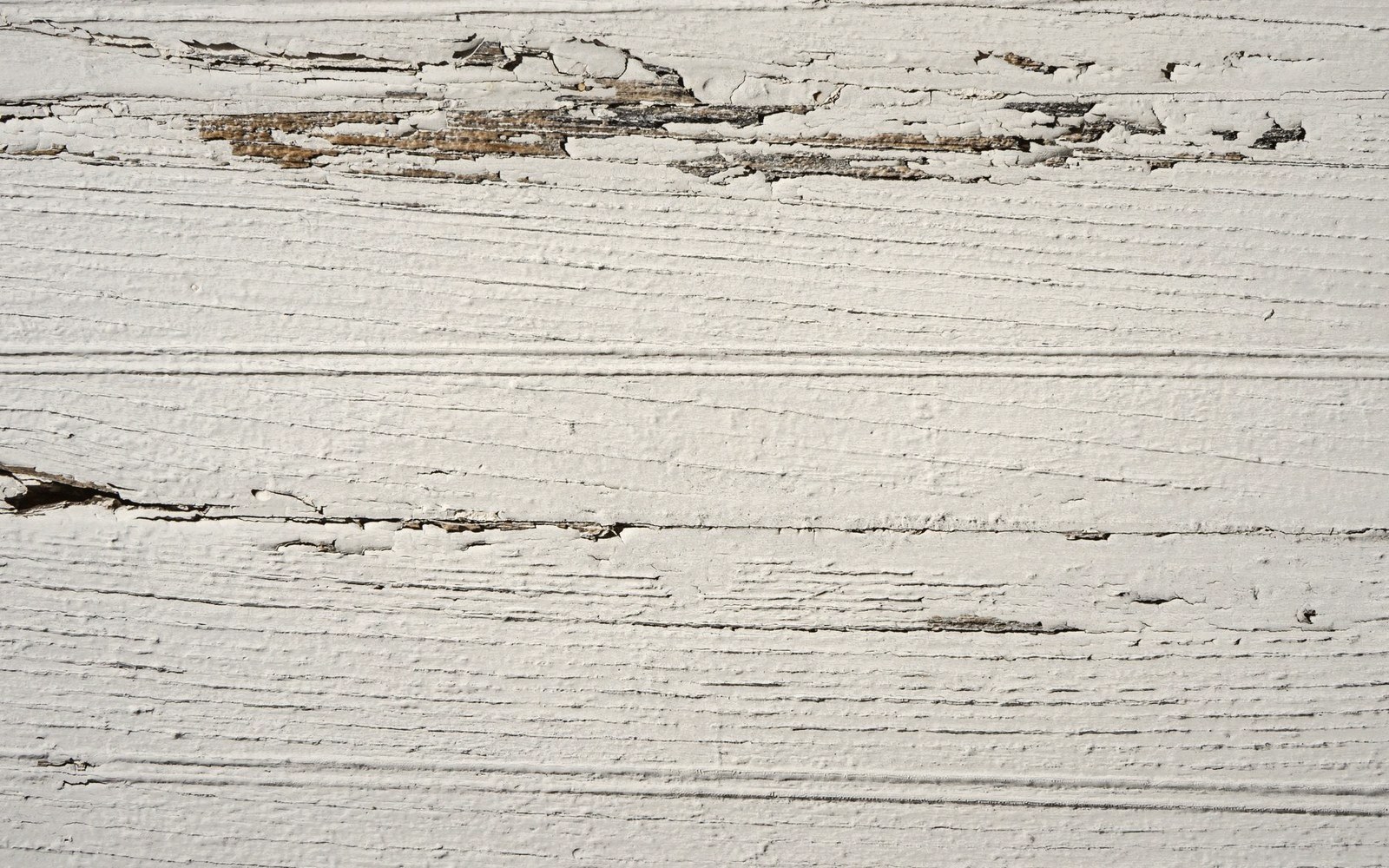
Look at the edges of a panel painting — particularly if the panel has warped slightly or if paint has been lost at the border. You may see the white ground exposed: chalky, hard, occasionally with fine cracks running across it. Those cracks, when they extend into the paint above, are called craquelure — the network of fine fractures that develops as an oil painting ages and the layers above shift against the relatively rigid ground beneath. On very old panels, this craquelure is dense and regular; on younger works or those on canvas, it is sparser or absent.
You can also read the ground through the paint in thinly applied passages. A transparent glaze over a white gesso ground reflects light back up through the paint film and gives the colour a luminosity that is impossible to achieve over a dark or opaque underlayer. This is a significant part of how Flemish painters achieved the jewel-like quality of their reds and blues: not saturation alone, but reflectance from below.
Impasto passages, by contrast, tell you almost nothing about the ground — thick paint is thick paint, and the ground is functionally buried. But in areas where the paint is drawn out thin, where a brush has dragged across a surface and left only a whisper of pigment, the texture of the ground comes through. On traditional gesso, smoothly prepared, thin paint flows evenly and reads cleanly. On a coarser acrylic ground — or one applied heavily and not sanded — you see the drag and pitting of the ground's surface in the paint above it.
This is why the ground is a compositional decision, not just a practical one. The painter who chooses a fine, well-sanded traditional gesso is choosing a particular relationship between paint and surface. The painter who uses a heavily textured acrylic ground is making a different choice, one that will be visible in every thinly painted passage of the finished work. The ground is not neutral. It is the first mark — it simply isn't usually thought of that way.