GROUND — layer 3 of seven
Two Whites That Are Not the Same
The ground a canvas receives before a single brushstroke of colour determines how every layer above it will behave. Oil-based and acrylic primers look almost identical when dry — but they are not.

What Divides Them
Dip a brush in oil paint over an acrylic ground and the paint sits on a surface that is sealed, slightly flexible, and only mildly absorbent. The acrylic ground — sometimes sold as “acrylic gesso,” though it contains no traditional gesso — is a plastic film. It dries within an hour or two as the water in its emulsion evaporates, leaving a smooth, rubbery layer that holds its shape when the canvas moves. That flexibility matters: a cotton or linen canvas shifts slightly with every change in humidity, and an acrylic ground moves with it without cracking.
An oil-based ground behaves differently in almost every particular. It is denser and more absorbent, which means the first layers of paint lean into it rather than floating on top. Painters describe this as “grip” — the way the bristles drag slightly, the way thin washes of colour sink and matte out rather than retaining their wet sheen. Oil grounds take far longer to cure: days at minimum, weeks in practice, because the linseed or alkyd medium has to oxidise fully rather than simply evaporate. A ground that is painted over too soon can lead to long-term instability, as the lower layer continues to dry and move beneath the paint above it.
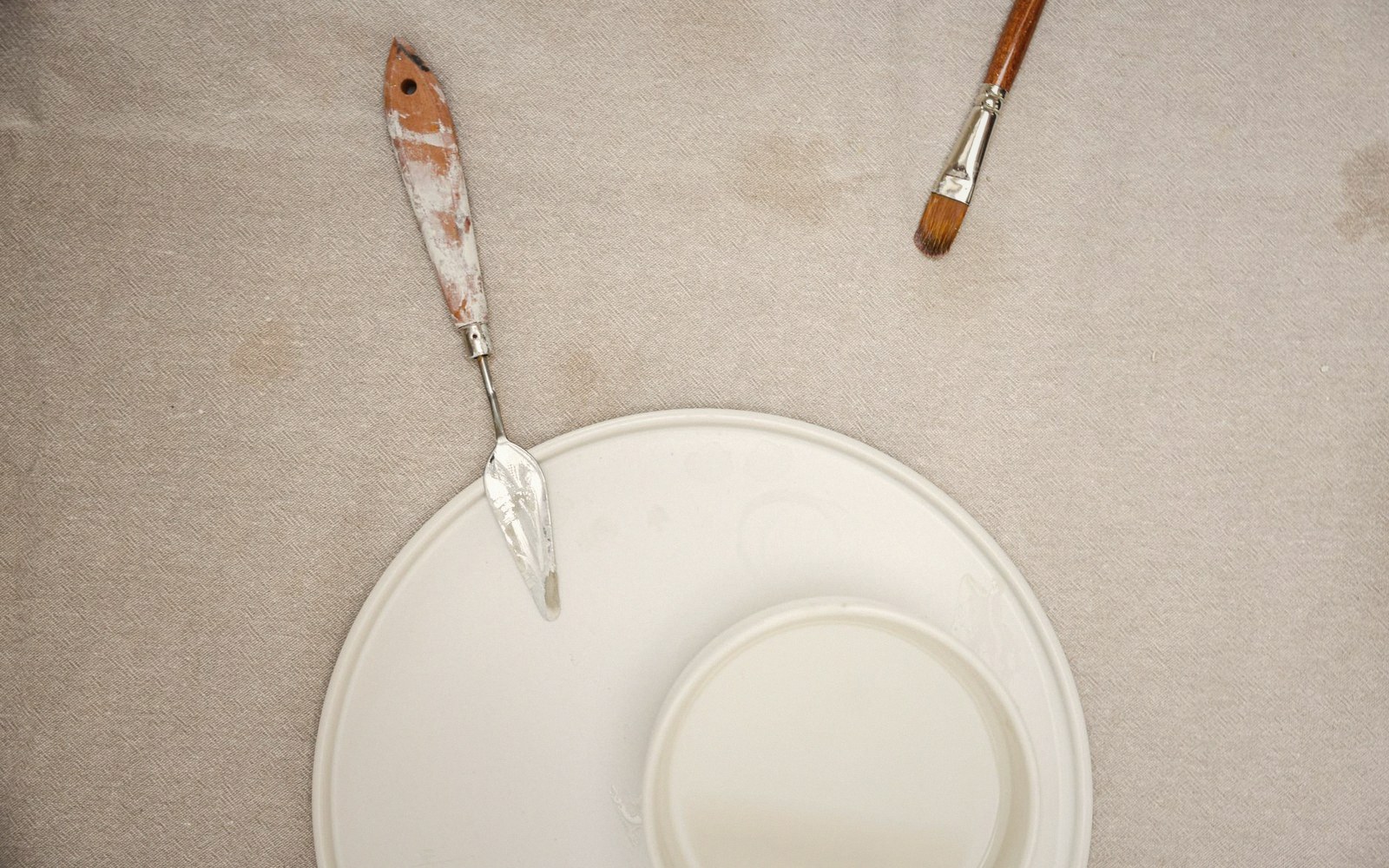
There is also a compatibility issue that runs in one direction only. Oil paint over acrylic ground: accepted practice, widely stable. Acrylic paint over an oil ground: a problem. Acrylic is water-based; it does not bond to an oily, non-porous surface reliably. The acrylic film can eventually detach. The rule — acrylic under oil, never oil under acrylic — has real physical logic behind it.
Absorbency shapes the look of finished paint quite directly. On an acrylic ground, glazes stay more luminous; the sealed surface reflects light back through thin layers. On an oil ground, those same glazes sink and deepen, reading as richer but less transparent. Neither is superior. They are different optical starting points, and a painter who switches between them without adjusting their approach will notice the difference immediately.
The white you see before painting begins is, in this sense, already a decision — about flexibility, about working time, about how the paint will land and what it will look like in fifty years.