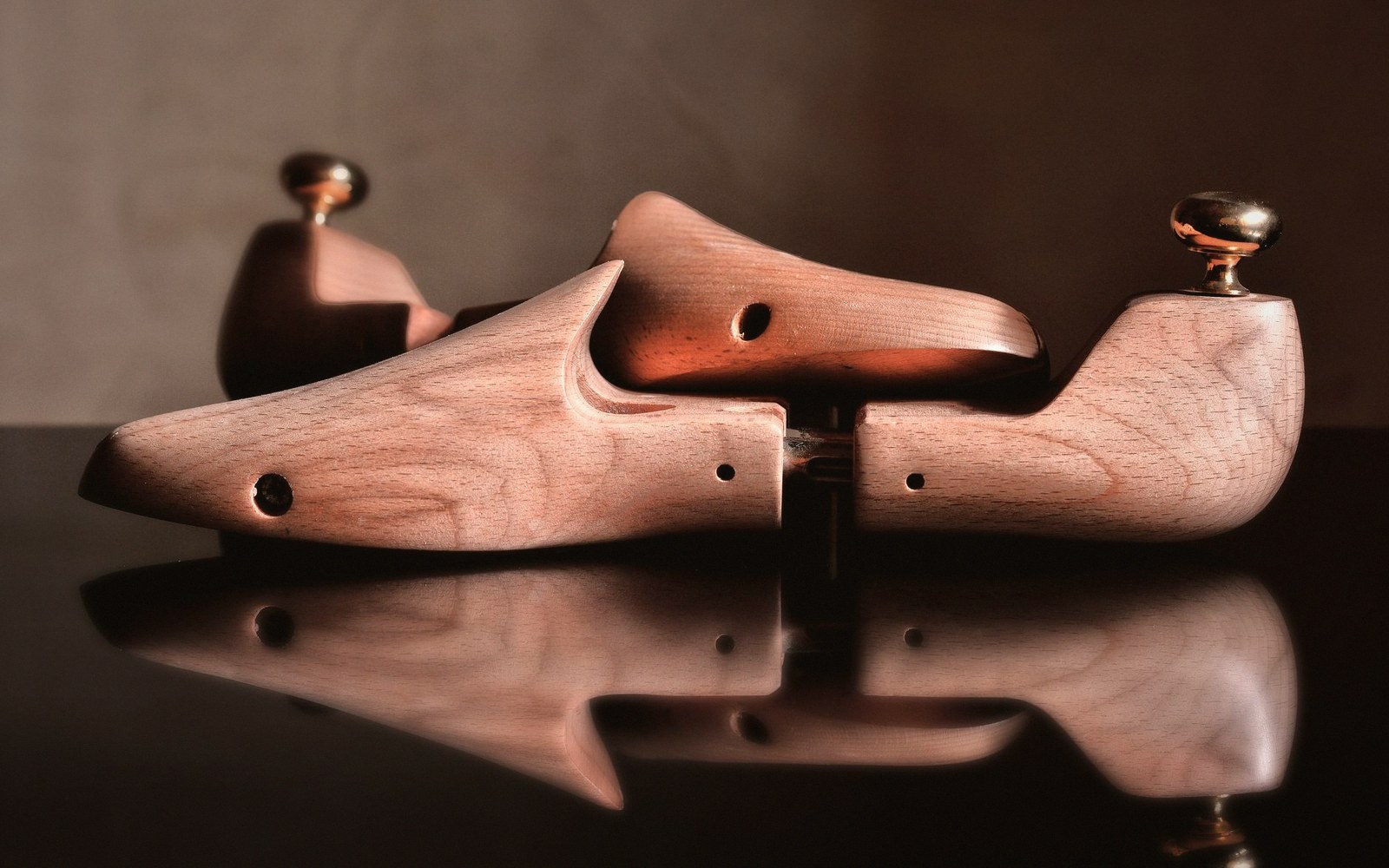
Corner of a wooden stretcher bar with expansion keys inserted, workbench surface below, overhead lamp
Photo: Moussa Idrissi / PexelsLayer 1 of seven
STRETCHER
The wooden skeleton underneath everything — why it moves, how it holds, and what happens when it fails.
Where STRETCHER sits
The stack, back to front, with band depth set by how much each layer carries here. STRETCHER is layer 1 of seven.
NOTHING BEHIND IT — THIS IS THE BACK OF THE PICTURE
IN FRONT OF IT ▲ CANVAS
What to look for in this layer
- Wedge
- a small hardwood insert pressed into a slot at each stretcher corner; drives the joint open to expand the frameFrom “Eight Taps with a Mallet” →
- Pine
- stiff, widely available, slightly less hygroscopic than the others; heavierFrom “Pine, Poplar, or Obeche — Does the Wood Actually Matter?” →
- Canvas slack at centre, tight at edges
- suggests mid-span bow in the long barsFrom “What Warped It” →
Everything in STRETCHER
3 pieces.
- Eight Taps with a MalletA walk-through of keying out a slack canvas — what the wedges do, how much tension is correct, and the sound that tells you to stop. Practical in register, written from the bench outward.3 min read
- Pine, Poplar, or Obeche — Does the Wood Actually Matter?A direct comparison of the three timber species most commonly used for stretcher bars, examining movement, weight and cost. Argues that the choice matters less than moisture control.2 min read
- What Warped ItAn explainer on why wooden stretchers rack and bow — seasonal humidity, uneven tension, bad corner construction. Identifies the signs before a warp becomes a problem.2 min read