STRETCHER — layer 1 of seven
What Warped It
Wood moves. Canvas pulls. The stretcher is the structure that holds both in check — until it doesn't.
Why a Stretcher Goes Wrong
Wood is hygroscopic: it absorbs and releases moisture from the air continuously, swelling across the grain in humid months and shrinking when heating systems dry the air out in winter. A stretcher bar made from pine or poplar does this whether it carries a painting or not. Stretched canvas adds tension across the frame — and tension is never perfectly even. If one side of a canvas was stapled tighter than the opposite side, or if the weave ran slightly off-square, the bars feel that asymmetry every day for decades.
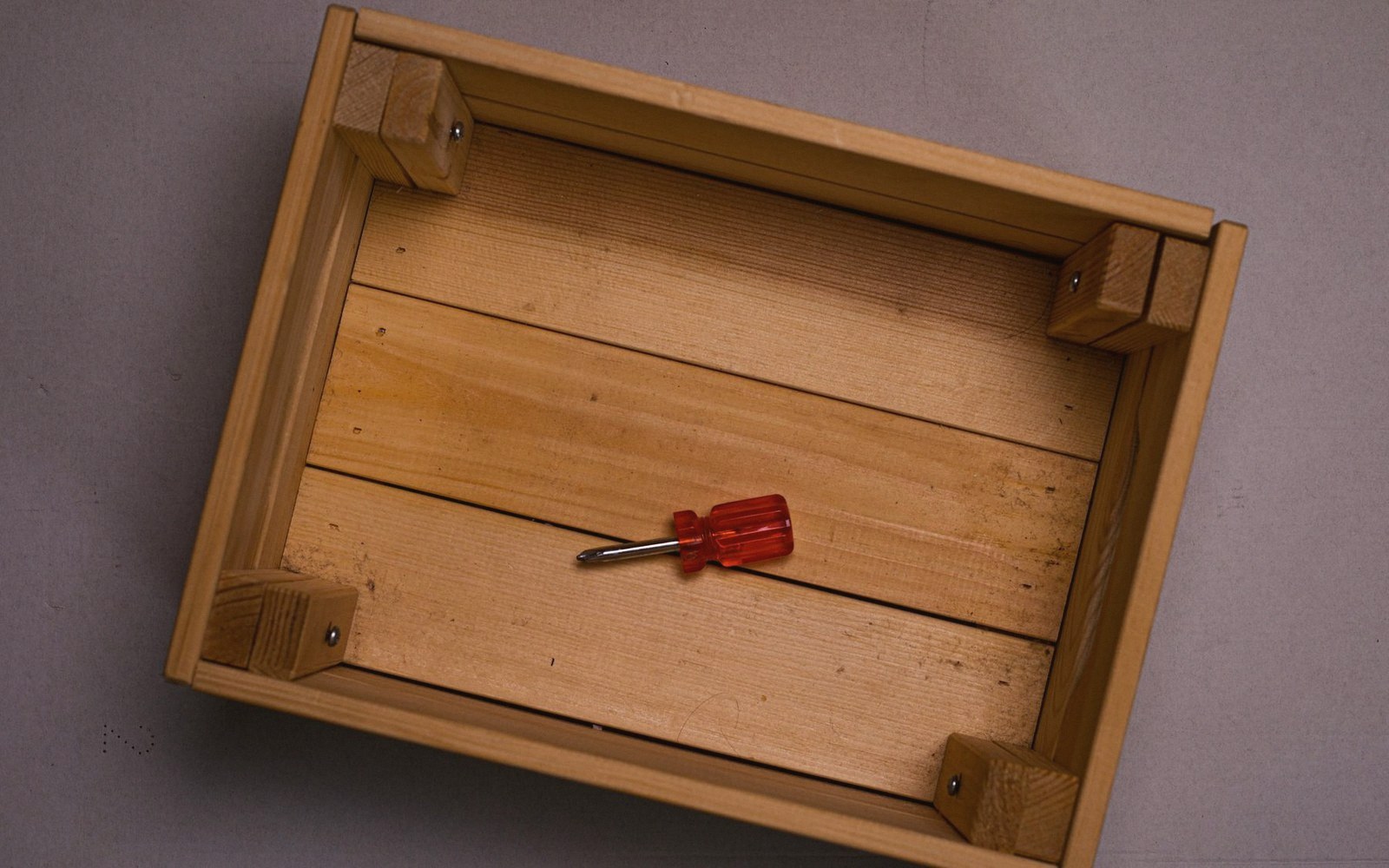
The corners are where failure starts. A well-made stretcher uses mortise-and-tenon or slotted lap joints with expansion wedges — the small wooden keys that let you increase tension by tapping the joint open. But if those joints are glued, pinned, or simply a butt joint held by a staple, they cannot flex. When the wood tries to move seasonally, the frame racks: the right angle at each corner closes or opens slightly, and what was a rectangle becomes a parallelogram. Viewed from the front, the canvas looks distorted. Stand to one side and you will often see the bars have bowed inward under the pressure of a canvas that dried tighter than the wood expected.
A cross-bar — the central brace fitted on larger stretchers — prevents mid-span bow, but only if it sits under tension rather than floating loose. If it has worked free, the long bars can curve noticeably: a concave arc that catches light and shows as a ridge or shadow through the paint surface.
Three signs worth looking for in a gallery: a canvas that is not taut at the centre but tight at the edges; corners where the fabric bunches or pleats rather than lying flat; and a surface that, viewed obliquely, shows a gentle bow rather than a true plane. These are early warnings — raking light makes each one unmistakable. None is a crisis yet, but left alone, chronic movement can open paint along the grain direction of the bars beneath, producing cracking that follows a suspiciously straight line.