LIGHT — layer 6 of seven
What Raking Light Shows That Normal Light Hides
One torch, held low and to the side, will tell you more about how a painting was made than an hour of straight-on staring.
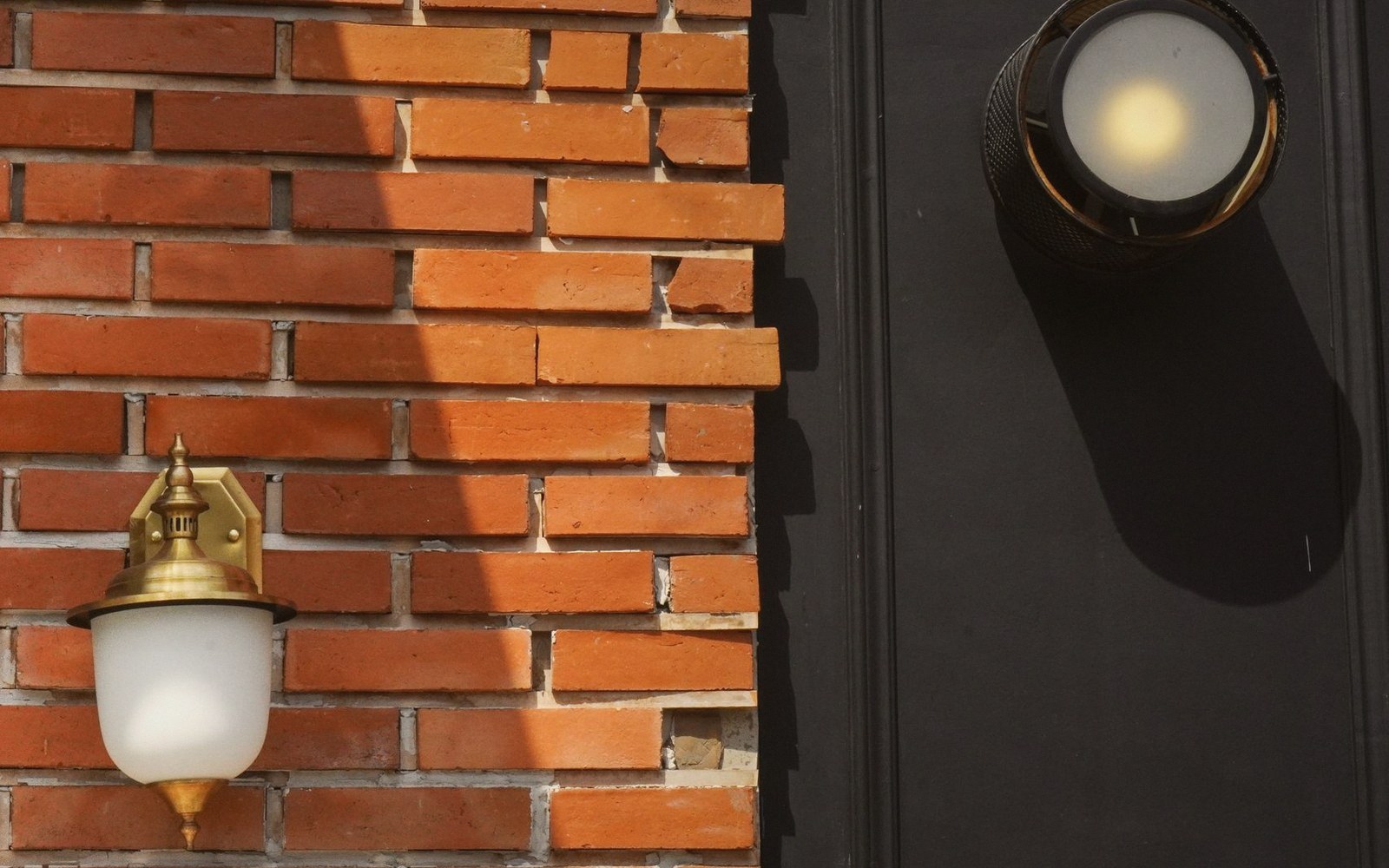
What raking light actually does
Most gallery lighting falls front-on, roughly even, designed to show colour without casting shadows. It is the ideal condition for reading a picture as image. It is a poor condition for reading it as object.
Raking light — a single source held close to the surface and angled sharply from the side — does the opposite. It skims across the paint rather than flooding it, and anything that rises above the plane casts a shadow. Suddenly the painting has topography. Every ridge of a loaded brushstroke, every pit left by a palette knife, every thread of the canvas weave pushing up through the ground becomes legible as a three-dimensional event.
The shadow is the point. A ridge of impasto that reads as a highlight in normal light now casts a hard edge. A thin, flat wash that looked opaque reveals itself as almost translucent when the light arrives at that angle. The eye, instead of absorbing colour, starts reading relief.
Four things raking light reveals
Brushwork. Direction, sequence and pressure all show up. A painter who worked wet-into-wet often leaves edges that melt; one who let each stroke dry before applying the next leaves a cleaner ridge. Raking light makes those edges architectural. You can sometimes follow the exact order strokes were laid down — later marks casting shadows over earlier ones.
Pentimenti. This Italian term, literally meaning “repentances,” describes changes the painter made mid-work: a hand moved, a horizon line shifted, a figure removed. Because oil paint can become slightly transparent over decades as it cures and the oil oxidises, earlier passages sometimes ghost back through upper layers. Raking light catches any difference in surface height between the original paint and what came after. Where a thick underpainting was reworked, the old form can appear as a faint topographic ridge beneath the revision.
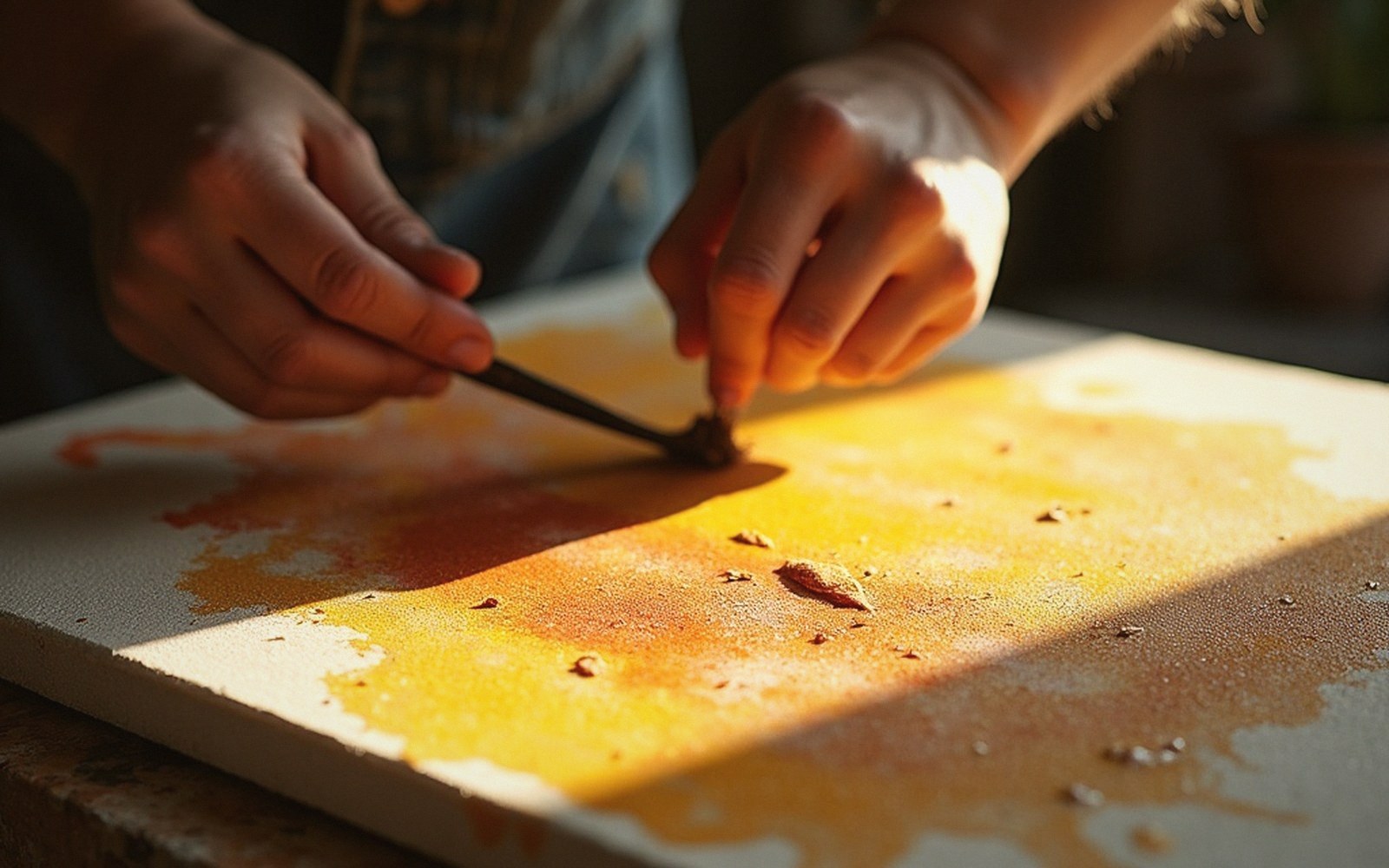
Cracking patterns. All aged oil paint cracks to some degree — the network of fine fractures is called craquelure. In even light, a fine craquelure can disappear into the surface. Under raking light, each crack casts its own micro-shadow and the entire network appears as if drawn. The pattern itself is informative: wide, deep cracks across thick paint can indicate upper layers that dried faster than the layers beneath them; shallow, web-like cracking often points to resin-heavy upper layers contracting as they age.
Canvas texture. The weave count of a canvas is a compositional decision — fine weaves disappear beneath paint, coarse ones push through. Raking light makes that weave visible as a repeating grid crossing the whole surface. Where the paint film is thin, the grid is strong; where impasto builds up, the weave flattens out beneath it. This contrast tells you where the painter worked thinly and where they piled on material.
Try it at home
The technique transfers directly. Take a framed painting or print — any object with a painted or drawn surface — and go into a darkened room. Use your phone torch (the flashlight function, not a flash). Hold it a few centimetres from the surface at one side and aim the beam almost parallel to the picture plane. Move it slowly from one edge to the other.
A few things to try: hold the torch low on one side, then reposition it to the opposite side and see how the shadows reverse — ridges that projected toward you now project away, which can make strokes look concave instead of convex. Try very low angles first (light nearly parallel to the surface), then gradually raise it. The steeper the angle, the more surface information disappears; the shallower the angle, the more emerges.
In galleries, this is exactly what conservators do with a portable fibre-optic light during condition checks. The physics are identical whether the instrument costs four hundred pounds or nothing. The geometry — a near-parallel beam, a shadowed surface — does all the work.