LIGHT — layer 6 of seven
When the Paint Casts a Shadow
Focuses on heavily built paint surfaces — impasto — and how directional light turns the surface into a relief map of the painter's decisions. Argues that impasto is better understood as sculpture than as colour.
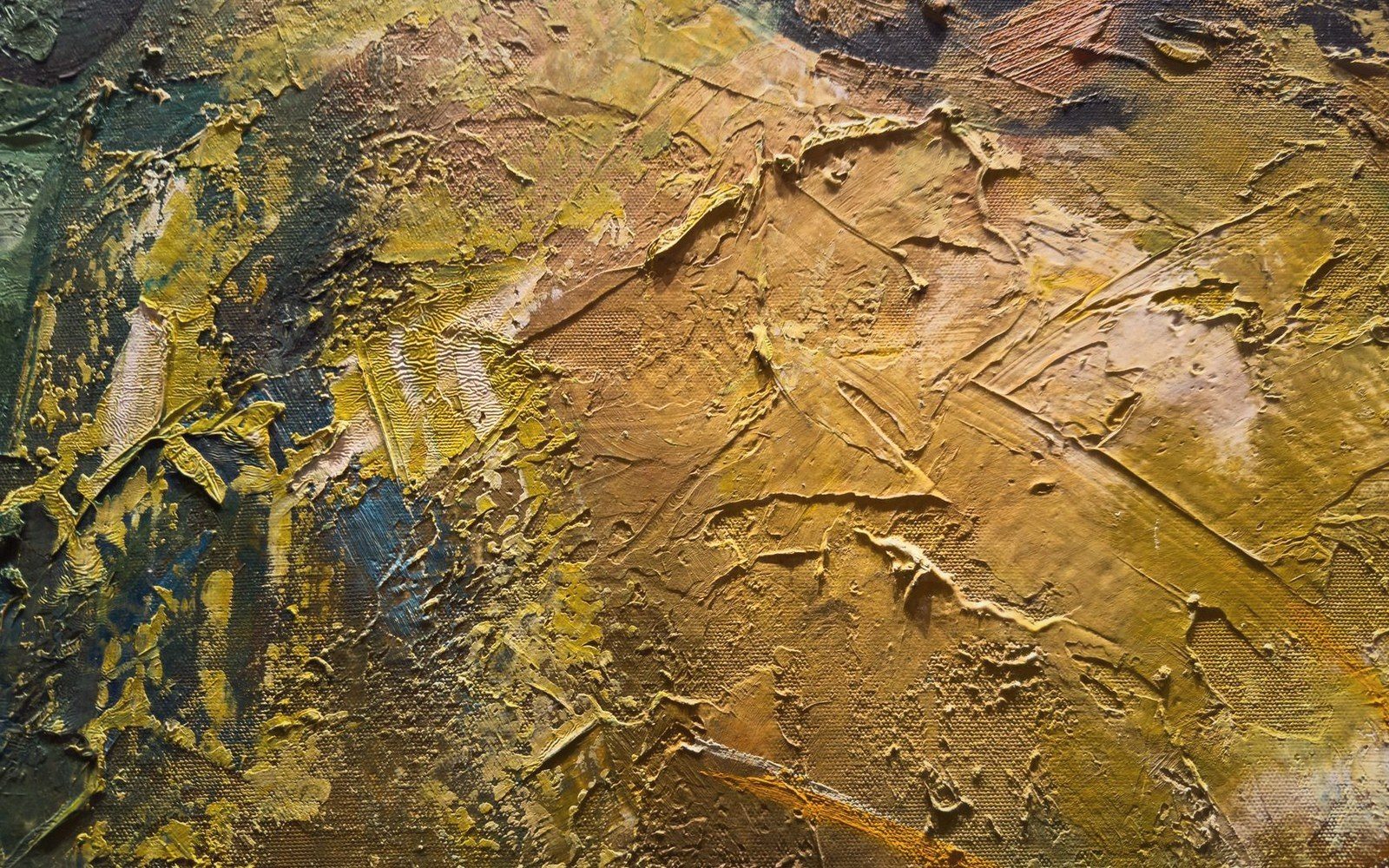
Impasto is not texture. It is topography — and light is what reads it.
The Surface as Relief
Stand close to a Rembrandt, a late Monet, or any thick-handled Soutine, and you will notice something that reproductions never convey: the paint has depth. Not metaphorical depth — physical depth. Ridges catch the light. Valleys fall into shadow. The surface is not a window into an image; it is an object in its own right.
This is impasto — paint applied heavily enough that it stands proud of the picture plane, retaining the exact shape the brush or knife left behind. The word comes from Italian, meaning something close to “dough,” and the analogy is honest. A loaded brush dragged sideways leaves a wall of pigment at its trailing edge. A palette knife pressed flat and pulled leaves a plateau with an abrupt cliff. These forms do not soften as oil paint dries; they harden. The gesture is preserved, three-dimensionally, for centuries.
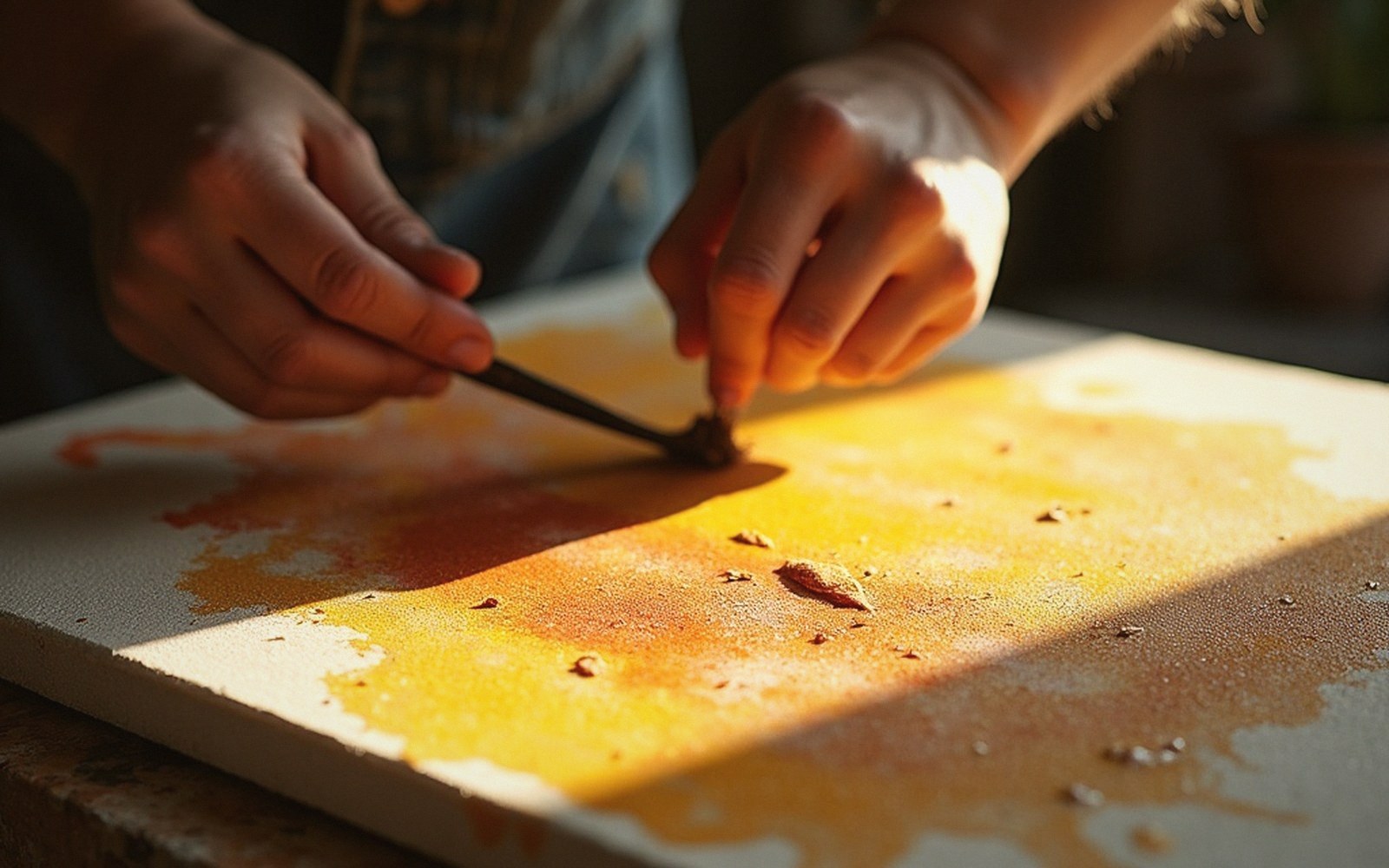
What makes this matter is directional light. In a gallery with uniform overhead illumination, impasto reads as rough texture — interesting, but flat in its effect. Bring a single raking light source low and to the side, and the entire surface transforms. Every ridge casts a shadow proportional to its height. The painter's individual mark — its speed, its pressure, its direction — becomes legible as never before. You are no longer reading colour; you are reading form.
This is why raking light is the standard tool conservators use to examine a painting's condition. It reveals what the painter built, ridge by ridge.
It also reframes what impasto actually is. Colour is part of it, certainly — but the real information is structural. Where paint is thickest, the painter pressed hardest, committed most, refused to hesitate. Thinly painted passages, by contrast, recede into quietness. The relief map of a heavily worked surface is a map of decisions: where attention concentrated, where the hand slowed, where it flew.
That is closer to sculpture than to colour application. The light does not illuminate impasto — it reads it.