PAINT — layer 4 of seven
Colours That Will Not Sit Still
Some pigments don't simply dry — they keep moving. Understanding why reveals something important about what a painted surface actually is.
The Myth of the Fixed Surface
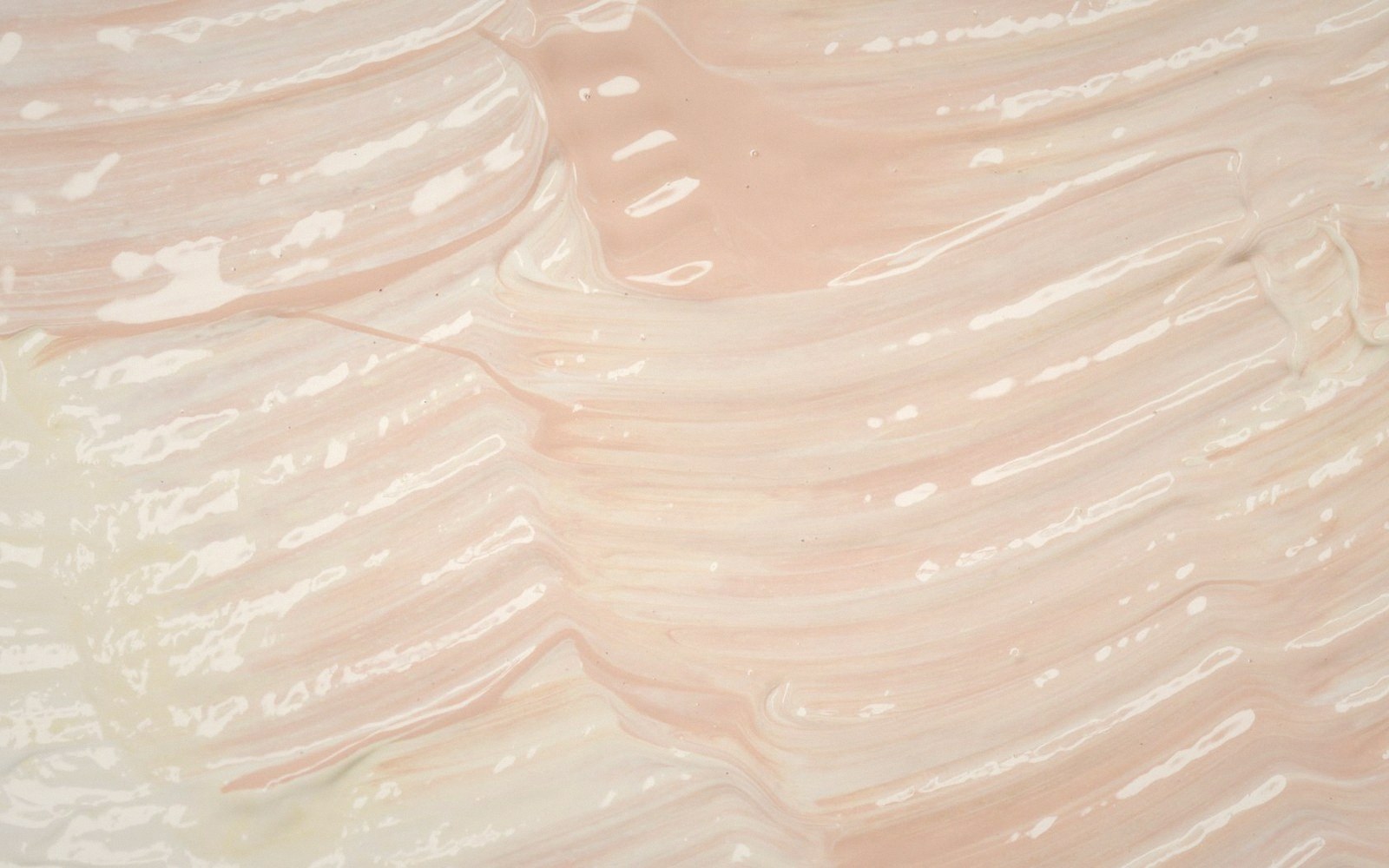
Stand close enough to an old oil painting and you notice the paint is not flat. It never was, exactly — brushwork leaves ridges — but some surfaces have shifted in ways the painter did not intend. Cracks run in patterns that follow no stroke. Dark passages have sunk into the layers beneath them. A pale area has drifted subtly upward, raising a skin. The paint moved after the artist left the room, and in some cases it has not entirely stopped.
This is not damage, or not only damage. It is chemistry. Oil paint dries not by evaporation but by oxidation: the oil absorbs oxygen and polymerises, cross-linking into a solid film. That process takes months for a single layer, years for a thick one — and while it is happening, certain pigments actively participate in ways that shift them physically through the film.
Lead White and the Slow Rise
Lead white — the principal white in European oil painting from antiquity until the nineteenth century — is a carbonate of lead, basic lead carbonate, and it behaves unlike almost any other pigment in oil. It does not merely sit suspended in the drying medium. It reacts with it. Lead ions migrate outward from the pigment particle and form lead soaps — metal carboxylate complexes formed from lead and the fatty acids in the oil. These soaps are mobile. They travel upward through the paint film, sometimes surfacing as small, rounded protrusions visible under raking light, sometimes aggregating into a denser, harder skin than the paint below it.
The result is a surface that has reordered itself. Conservation scientists using X-ray fluorescence and synchrotron scanning have mapped this lead soap migration in detail over the past two decades, finding it in Rembrandt, in Rubens, in Vermeer — painters who worked with lead white heavily and often. The protrusions, called lead soap protrusions in the technical literature, appear most commonly in thickly applied pale passages. The paint is not deteriorating in the ordinary sense. It is completing a chemical process the painter set in motion and could not entirely have predicted.
Bitumen and the Layer That Never Hardened
The opposite problem comes from bitumen, also called asphaltum — a tar-derived material used as a transparent brown glaze throughout the seventeenth and eighteenth centuries, and heavily again by British painters of the late eighteenth and early nineteenth centuries who prized its rich, warm depth. Bitumen never fully polymerises. It contains a class of hydrocarbons with no reactive double bonds for cross-linking, and so it remains permanently soft beneath whatever is painted over it.
As the surrounding layers cure and shrink, the soft bitumen layer cannot keep pace. It wrinkles. The surface above it sinks and buckles in patterns conservators call alligatoring — wide, irregular cracks resembling dried mud — and because the layer beneath stays mobile, those cracks do not stabilise. Paintings heavy with bitumen glazes remain in a slow state of collapse. Joshua Reynolds used bitumen extensively; many of his portraits have suffered visibly for it. The problem was understood even in his own time but widely ignored because the immediate visual effect was so seductive.
What the Surface Is Telling You
Both cases — lead white rising, bitumen sinking — point to the same fact: a painted surface is not an inert record of marks but an ongoing chemical event. Some of that event is benign or even interesting, a ghost of process made visible. Some of it is destructive. Materials science has mapped the mechanisms well enough now that no painter working today should repeat the bitumen mistake, and the slow migration of lead soaps, while still not perfectly predictable, is at least understood as process rather than pathology.
What remains is the looking. A raised skin in an old pale passage, a web of wide cracks in a warm brown shadow — these are the painting telling you, at material level, what it is made of and what making it actually involved.