PAINT — layer 4 of seven
Dirt, Fired and Ground
A concise history of the earth pigments — raw and burnt sienna, umber, yellow ochre — tracing their geological origin and their continuous use across roughly five centuries of European panel and canvas painting.
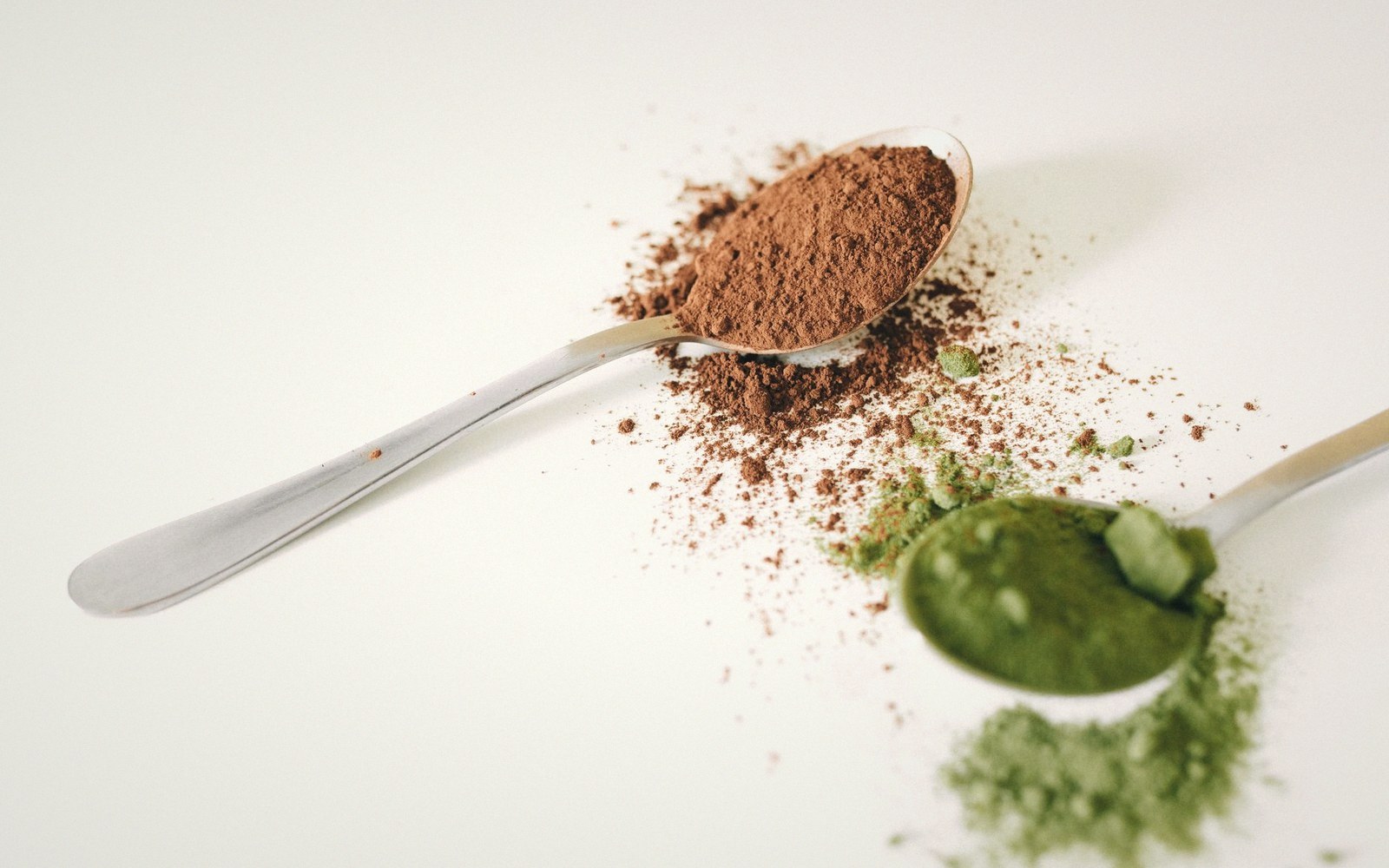
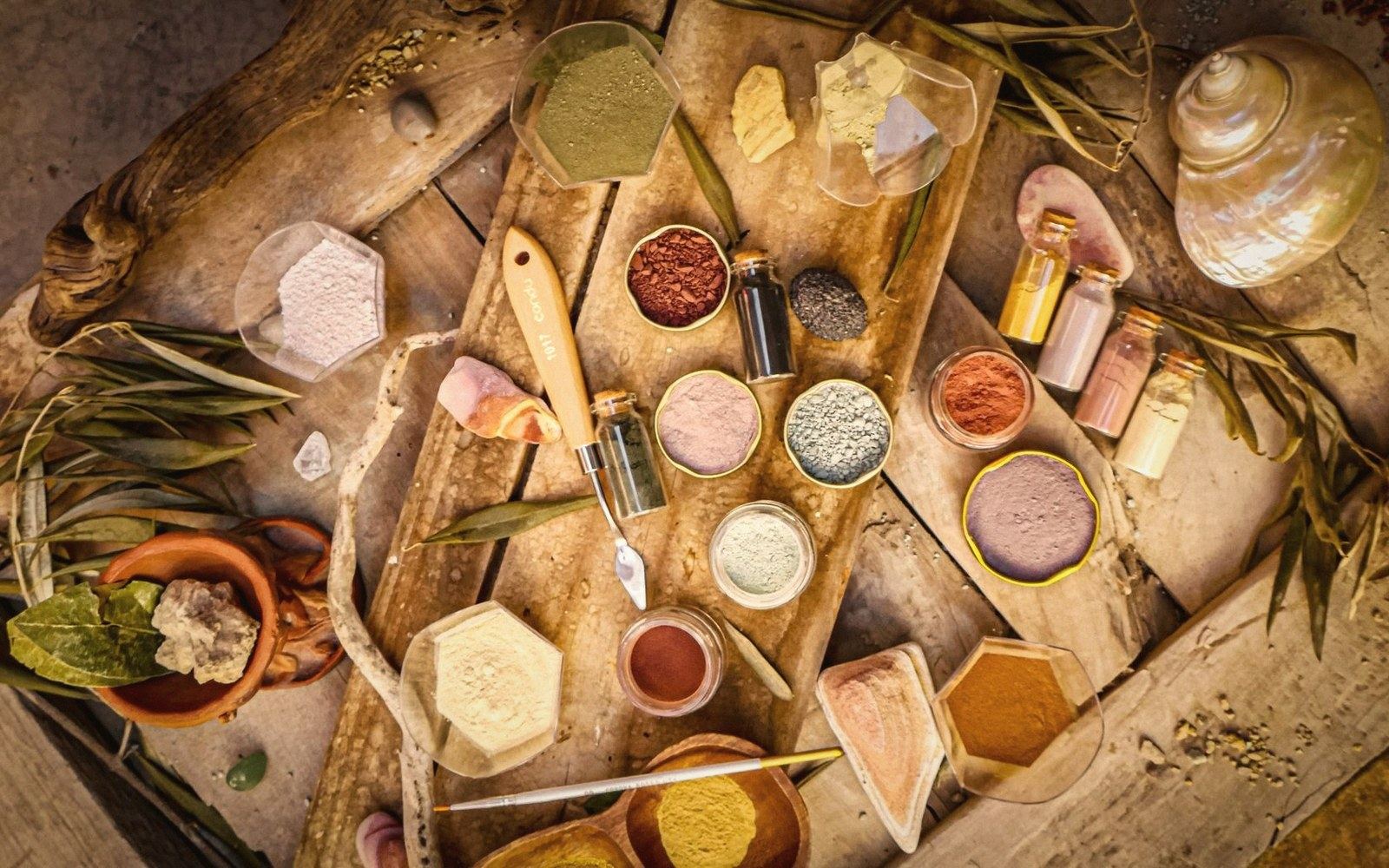
Earth pigments — ochre to umber — and why the same colours have been on painters' palettes for five centuries
The Ground Beneath the Paint
Pick up a handful of clay-rich soil almost anywhere in the world and you are holding, in crude form, the raw material of the oldest pigments still in daily use. The earth pigments — yellow ochre, raw sienna, raw umber, burnt sienna, burnt umber — are not synthetic compounds cooked up in a laboratory. They are geological deposits, dug from the ground, washed, dried, and ground to powder. The fact that they have survived every artistic revolution from the Renaissance to the present without being replaced is not sentiment. It is chemistry.
These colours get their character from iron oxide. In its commonest hydrated form, iron oxide is yellow — that is yellow ochre. Heat drives off the water molecules, and the yellow shifts toward orange-red — that is the transformation from raw to burnt. Add manganese dioxide to the mix, in varying proportions, and the colour darkens and turns cooler: raw umber is greenish-brown, burnt umber is a warmer, deeper brown. Sienna — named for the Tuscan city near whose countryside the finest deposits were historically quarried — is distinguished from simple ochre by a higher concentration of both iron and silica, which gives it greater translucency when ground in oil.
The geology matters because it is the source of everything painters value in these materials. Unlike synthetic pigments, whose particle size and composition are controlled in manufacture, natural earth pigments carry slight variations from one deposit to the next. The sienna from around Siena itself — the Italian region of Tuscany has been exporting it since at least the fifteenth century — is not identical to the ochres of Roussillon in southern France, whose cliffs run vivid yellow-orange and whose deposits have been mined for pigment and dye since antiquity. The ochre fields at Roussillon in the Vaucluse département were commercially worked well into the twentieth century; at their peak, the region accounted for the majority of Europe's ochre supply. Neither is identical to the umbers named for Umbria, though by the time trade had standardised and global deposits were exploited, the geographic names had become variety labels more than strict provenance guarantees.
Five Centuries of Continuous Use
Follow any major tradition of European painting and the earth pigments are there at every turn, doing work that shinier, more expensive colours could not. This is partly cost — in periods when ultramarine was extracted from lapis lazuli shipped overland from Afghanistan and priced by weight like gold, ochre cost almost nothing — but economy alone does not explain why painters who could afford anything kept reaching for these colours.
The Flemish painters of the fifteenth century built their panel pictures in layers, beginning with a ground of chalk or gypsum bound in glue, continuing with underdrawing, then progressing through successive transparent and opaque layers of paint in linseed or walnut oil. At every stage the earth pigments appear: yellow ochre in the first opaque flesh-tone passages, raw umber in the brown-grey underpaint used to model form before colour was applied, raw sienna in transparent glazes that shifted the warmth of a shadow. Jan van Eyck's workshop would have ground these materials themselves, using a muller on a stone slab, adding oil gradually until the paste reached the right consistency.
On the Italian side of the Alps, the same pigments occupied the same structural roles. The egg tempera traditions of the Trecento — fourteenth-century Italian panel painting — relied heavily on yellow ochre and umber for modelling: thin strokes of progressively lighter ochre-and-white mixtures built up the convex planes of drapery and face; umber darkened the deepest shadows. When the transition to oil began in Italy during the latter half of the fifteenth century, the earth pigments made the move intact, since they behave at least as well in oil as in egg. They dry reliably, they do not shift position in the drying film as some lead-based whites do, and they are chemically stable — they will not react with sulphur compounds in the atmosphere and blacken, as lead white and some copper-based greens occasionally do.
By the sixteenth century, with the canvas format becoming dominant in Venice, the earth pigments found a new structural role: the coloured ground. Venetian painters, Titian among them, routinely toned their canvases with a mid-warm ground — a thin layer of red-brown or ochre-tinted paint over the white primer — rather than leaving the surface white. This ground read through the subsequent paint layers in the shadows and half-tones, unifying the temperature of the whole surface. The colour used for this toning was typically a mixture of red earth, yellow ochre, and lead white, with oil as binder. The choice of ground colour shaped what the painting looked like before a single representational mark had been made.
Rembrandt van Rijn's studio practice in the seventeenth century took this further still. X-ray examination of his panels and canvases has consistently revealed complex underlayers containing lead white, ochre, and umber — sometimes applied as a deliberate warm-toned ground, sometimes as a separate dead-colour layer that modelled the light and dark of the composition in monochrome before colour was added on top. The earth pigments were doing the structural work, with costlier colours reserved for the surface passages visible in the final picture. Umber in particular was a workhorse pigment for this purpose: it dries fast in oil — faster than almost any other — because its manganese content acts as a desiccant, catalysing the oxidative cross-linking that constitutes oil-paint drying. A painter using a lot of umber in an underpainting could return to the picture sooner.
That drying speed has a consequence, however. Under the fat-over-lean rule that governs how oil-paint layers must be sequenced — each layer must contain at least as much oil as the one beneath it — an umber-rich underpainting that dries fast and lean creates particular obligations for what goes on top. Paint the final layers too lean and they may not adhere well; ignore the problem and cracking can follow decades later.
Burning Changes Everything
The shift from raw to burnt is achieved simply: the raw earth is calcined — heated to temperatures typically between 300 and 900 degrees Celsius, depending on the target colour. This drives out chemically bound water from the hydrated iron oxide (the mineral goethite), converting it to anhydrous iron oxide (hematite), which is red. The precise temperature and duration control exactly where in the red-orange-brown range the calcined earth lands.
Burnt sienna is the most dramatic example. Raw sienna is a yellowish, semi-transparent brown — useful, but quiet. Fired, it becomes intensely warm orange-red, transparent in oil, and of great depth of tone. It is one of the most optically satisfying transparent pigments in the range, capable of producing glazes whose warmth seems to come from inside the paint rather than sitting on the surface. Portrait painters have used it for this reason for centuries: applied thin over a cooler opaque layer, burnt sienna reads in the skin as warmth rather than colour.
Burnt umber shifts from the greenish raw state to a richer, redder dark brown. It loses some of the raw pigment's slight coolness and becomes more conventionally warm. Both calcined materials retain the geological variation of the parent earth, but the firing introduces a processing variable as well: two batches from the same deposit, fired at slightly different temperatures, will not be identical.
The firing process has been understood and practised continuously since antiquity. Archaeological evidence — pigment grinding stones, ochre nodules scored and abraded — demonstrates that red ochre, which owes its colour to hematite, the same anhydrous iron oxide that firing produces, was used as pigment by anatomically modern humans far earlier than any evidence of organised painting. The same chemistry that a Palaeolithic painter exploited by choosing red earth over yellow is what a seventeenth-century Flemish artist was controlling when they calcined raw umber in a pan over heat to speed their underpaint's drying time.
Why They Have Not Been Replaced
Synthetic iron oxides — manufactured by precipitating iron compounds in controlled industrial processes — have been available since the early nineteenth century. They are consistent, cheap, and lightfast. They are also widely used in modern paint manufacture, often described on a tube's label with a colour index designation rather than a geological name: PY42 is synthetic yellow iron oxide, PR101 is synthetic red iron oxide.
Yet natural earth pigments have not been retired. Artists still seek them out, and the reason is the same geological variability that makes them technically awkward to standardise: the particle shape of a natural earth is irregular in a way that a precipitated synthetic is not. Irregular particles scatter light differently. The semi-transparent quality of a fine-ground natural sienna in oil is not quite replicated by its synthetic counterpart. The difference is perceptible, though not always large, and painters working in any medium — oil, tempera, watercolour — who spend time with the natural materials tend to become attached to exactly those qualities that resist standardisation.
The earth pigments persist because they are genuinely good: stable, compatible with every medium, available in every historical period, and capable of visual effects that more complex pigments cannot match. Five centuries of continuous use is a longer test than any laboratory trial.